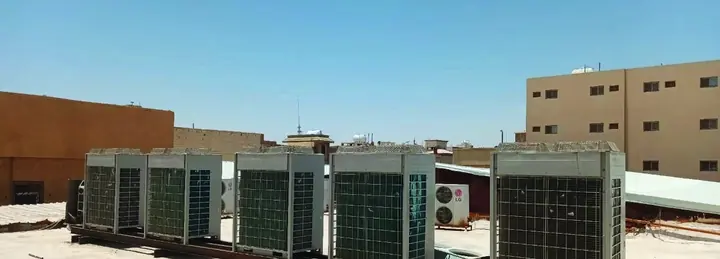
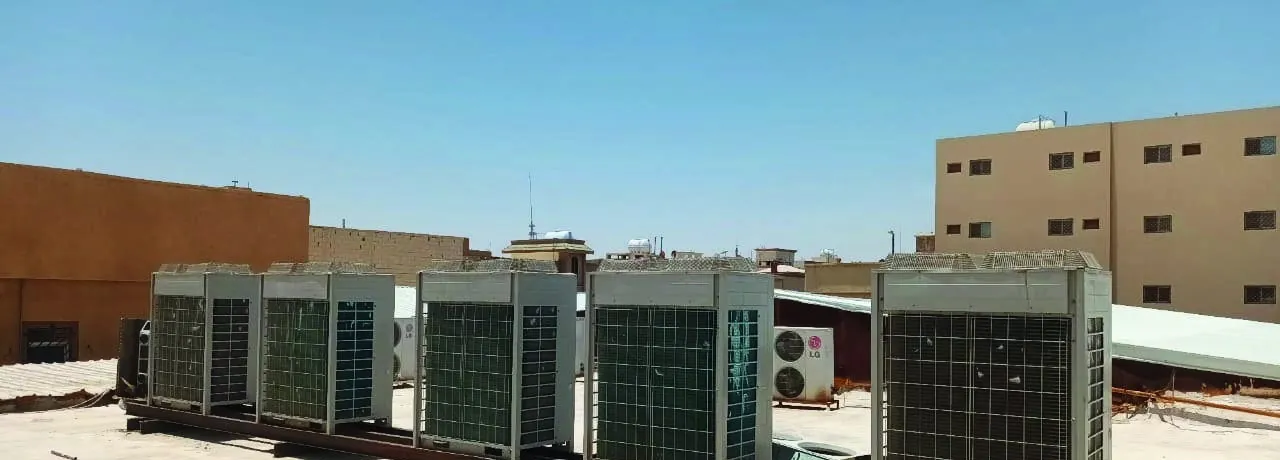
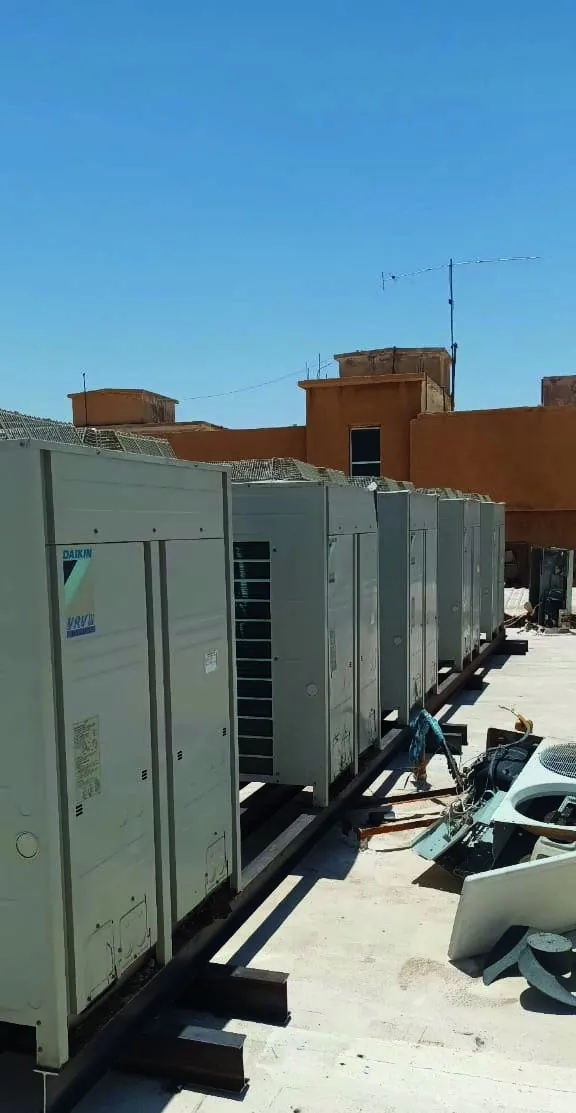
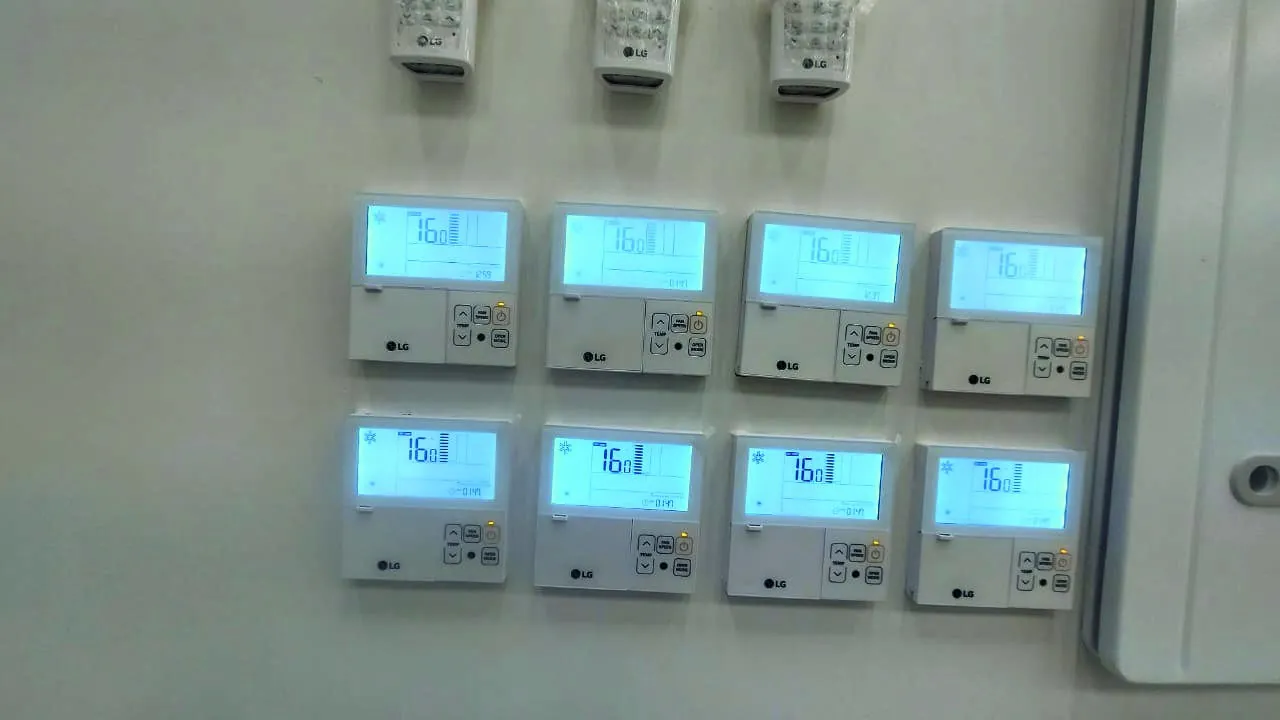
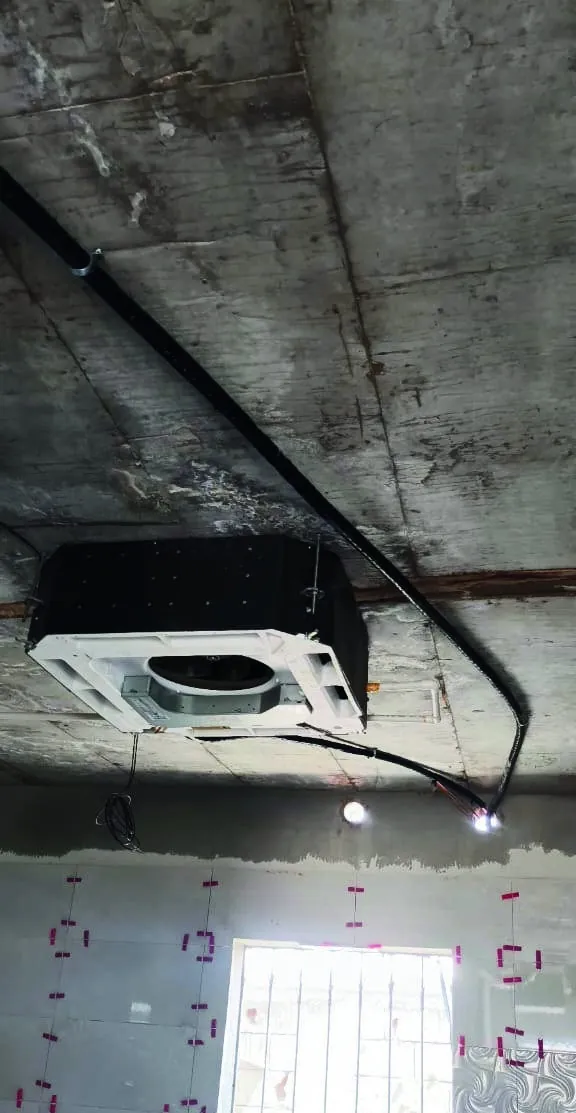
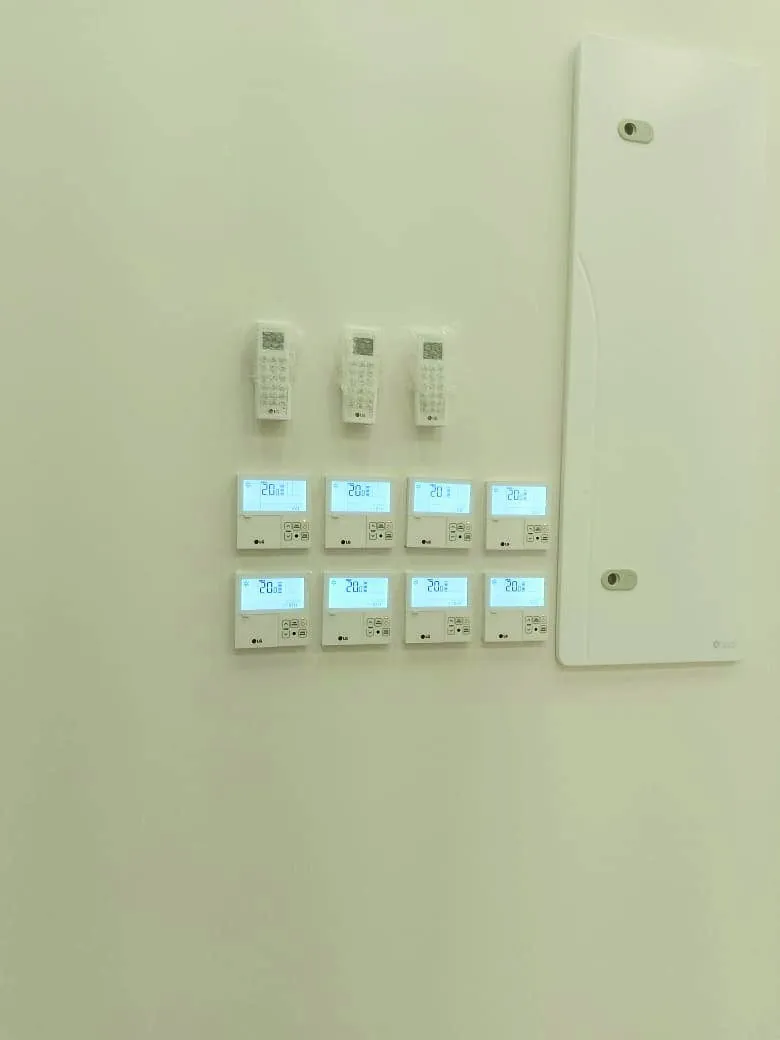
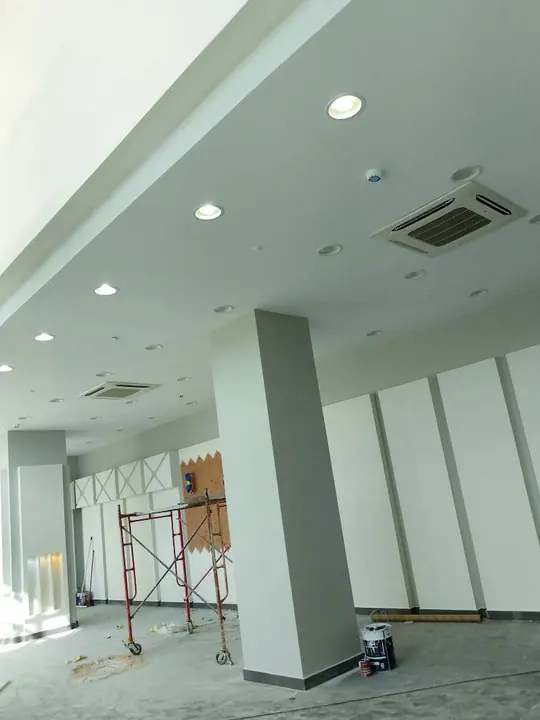
VRF and VRV systems suit buildings with many rooms and zones that need independent control, without crowding the roof with an outdoor unit for every room. We install them with modern methods and tools and pay particular attention to pipe network design, connections, pressure testing, vacuum and commissioning, because that is what decides how the system performs over the long run.
VRF stands for variable refrigerant flow. One outdoor unit, or a bank of them, connects to a number of indoor units through a single copper pipe network. The system meters how much refrigerant each indoor unit receives according to its actual demand, while the outdoor compressors vary their speed to follow the total load instead of constantly switching on and off. VRV is one manufacturer's trade name that has become widely used in the market for the same concept.
These systems can mix different indoor unit types on the same network, such as wall-mounted, cassette and concealed ducted, so each room gets the unit that suits its design.
Where VRF is the right choice
It suits buildings with many spaces that are used at different times and carry different heat loads. Each occupant sets the temperature in their own zone without affecting anyone else, and there are fewer outdoor units on the roof or facade than with a separate unit for every room. It also helps in buildings where large ducts are hard to route, because what runs between floors and rooms is mostly copper pipe and control wiring rather than bulky ductwork.
Offices and corporate headquarters
Showrooms and commercial halls
Clinics and medical complexes
Hotels and serviced apartments
Villas and multi-room residential buildings
Design and installation: the details that matter
VRF performance depends on the quality of the pipe network more than that of most other systems, because an error in pipe sizes, lengths or cleanliness affects the whole installation. We plan the network before work starts and follow the manufacturer's instructions at every stage.
Pipe routing checked against allowable lengths and height differences
Branch joints installed in the correct positions and orientation
Brazing with nitrogen flowing to limit oxidation inside the pipes
Control and communication wiring between units and controllers
Nitrogen pressure testing for leaks, then evacuation to remove air and moisture
Additional refrigerant charge calculated from liquid-line lengths and sizes
Commissioning, addressing, central control set-up and per-unit checks
When VRF is not the best fit
For all its advantages, VRF costs more up front than conventional systems, and servicing it calls for specialised technicians. In small spaces or homes that only need a few units, or in large open areas with uniform use, split, package or conventional ducted systems may make more economic sense, and we will tell you so plainly during the study.
Why Rukn Al Khaleej for this service?
01
Manufacturer's Instructions Followed
We follow the manufacturer's instructions at every stage, from piping and brazing to testing and commissioning, because any shortcut affects the whole system.
02
Study Before Installation
Our engineers review the building, its zones and how it is used before proposing a system, and compare VRF with conventional options openly.
03
Flexible Indoor Unit Choice
We mix wall-mounted, cassette and concealed ducted units on one system to suit each room, rather than forcing one style on every space.
In principle there is none. Both work by controlling how much refrigerant flows to each indoor unit according to demand. VRF is the generic name for the technology, while VRV is one manufacturer's trade name that became widely used in the market for the same type of system.
Can I run just one room without cooling the whole building?
Yes, and that is one of the main advantages. Each indoor unit or zone has its own controller and can be switched off or set to a different temperature without affecting the others, while the outdoor unit adjusts its output automatically to the actual load of the units running.
Can indoor units be added to the system later?
That depends on the total capacity of the outdoor unit and on the pipe network design, its length limits and connections. If you expect to expand, mention it at the study stage so it can be factored into capacity selection and the placement of branch joints.
Is a VRF system harder to maintain than regular AC?
It needs technicians who understand the system and have the right diagnostic tools, but routine maintenance involves familiar tasks such as cleaning filters, coils and drain lines and checking pressures and connections. Getting the installation right from the start is one of the best ways to reduce faults later.