What Is a VRF System, and When Is It the Best Choice for Your Building?
A VRF system connects many indoor units to a shared outdoor system and adjusts refrigerant flow to what each zone needs. Learn how it works, its strengths and limitations, and the buildings where it fits best.
5 min read
The idea in simple terms
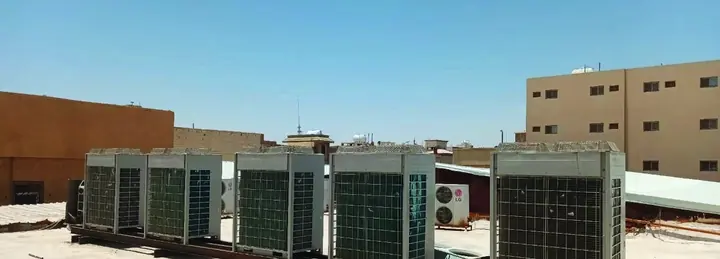
VRF stands for Variable Refrigerant Flow. The system is also widely known as VRV, a trade name for the same technology. The core idea is that one outdoor unit, or a group of linked outdoor units, serves several indoor units spread across rooms, offices and halls, instead of every room having its own separate AC with its own outdoor unit.
The indoor units connect to the outdoor system through a network of copper refrigerant pipes and branch joints, and an electronic control system distributes refrigerant to each unit according to its needs. Occupants of each room or zone can set their own temperature independently. In principle it resembles split AC units, but on a larger scale and with finer control.
How it works: flow that follows demand
In conventional fixed-speed ACs, the compressor runs at full capacity and then stops, over and over throughout the day. In a VRF system, the outdoor units use inverter compressors that continuously vary their speed, increasing refrigerant flow when cooling demand rises and reducing it when demand falls.
Each indoor unit has an electronic expansion valve that meters the refrigerant it receives according to the load in that space and the temperature required, and the units communicate with the outdoor system through control wiring. The result is that each zone gets close to what it actually needs, which is especially useful in buildings where not all spaces are occupied at the same time, or where loads change with orientation and time of day.
Because buildings rarely run at full load all day, this ability to follow the actual load helps avoid frequent on-off cycling, keeps room temperatures more stable and usually helps reduce consumption compared with fixed-speed systems.
Heat pump vs heat recovery: what is the difference?
VRF systems come in two main types. In a heat pump system, all indoor units connected to the same outdoor system operate in one mode at a time: either cooling or heating. This is the most common choice for buildings that need cooling for most of the year and only limited heating in winter.
A heat recovery system allows some zones to be cooled while others are heated at the same time, moving heat removed from the cooled zones to those that need heating. It requires additional components and more careful design, and it is useful in buildings such as hotels and large office blocks where room needs differ at certain times of the year. The designer selects the right type after studying how the building is used. In Riyadh, where cooling dominates, a heat pump system is enough for many projects, while heat recovery is worth studying for large buildings with varied needs.
Advantages of VRF
VRF is widely used in large residential and commercial projects for practical reasons, including:
Independent control for each room or zone, so unused spaces are not cooled unnecessarily.
Good efficiency at part load, which is how most buildings operate most of the time.
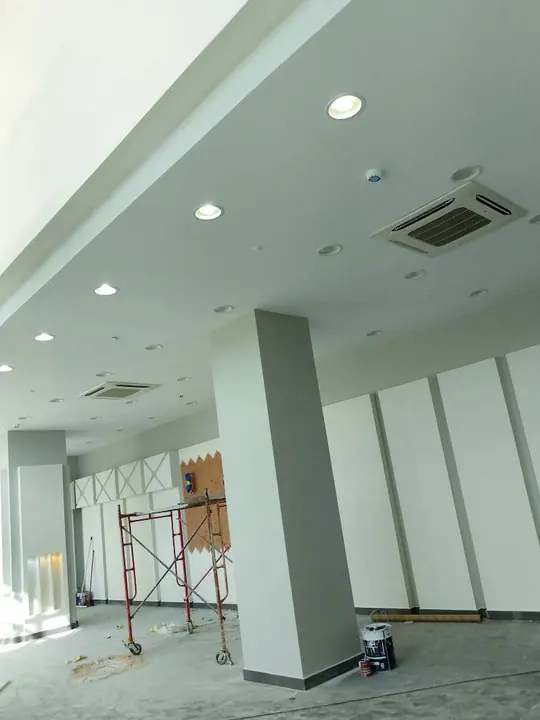
A wide choice of indoor unit types on the same system, such as wall-mounted, cassette and concealed ducted units.
Fewer outdoor units than installing a separate split for every room, which tidies up the roof or facade.
Often less space than chilled-water systems, which usually need pumps and a water pipe network, and sometimes a plant room.
Central control and scheduling options that are useful for facility managers.
Limitations to understand before deciding
The success of a VRF system depends on the quality of design and installation as much as on the equipment itself; good equipment can perform poorly if the system is badly designed or installed. That is why it should be assessed realistically before you commit.
Despite its strengths, VRF is not the right answer for every project. Keep these points in mind:
Upfront cost is usually higher than conventional split units.
It needs precise design for load calculation, unit selection and pipe sizing, within the pipe length and height difference limits set by the manufacturer.
Installation quality is critical: brazing, internal pipe cleanliness, pressure testing, evacuation and charging the correct amount of refrigerant must all be done carefully by qualified technicians.
A single system can hold a large refrigerant charge, so safety standards consider the charge relative to the smallest room served, and some cases call for extra measures such as leak detectors.
Many indoor units depend on a shared outdoor system, so a single fault can affect several zones at once, which makes regular maintenance and accurate diagnosis essential.
When is VRF the best choice?
VRF is often the best fit when a building has multiple spaces that need independent control and long operating hours, and when you want fewer outdoor units and a clean look on the roof and facades. In a small apartment or a building with only a few rooms, separate split units may be simpler and more economical. It is best to decide at an early design stage, since pipe routes and outdoor unit locations need to be coordinated with the architectural design.
Typical buildings where VRF fits well include:
Large villas and palaces with many rooms.
Office and administrative buildings.
Hotels and serviced apartments.
Clinics and medical centres.
Showrooms and commercial buildings with multiple spaces.
Key takeaway
VRF is a flexible, efficient solution for multi-zone buildings that need independent control and good efficiency, but it only delivers those benefits with careful design and professional installation. If you are considering it for your project, start with a technical study of the building. The Rukn Al Khaleej team is happy to help you weigh the options, then supply and install the system.