Practical Ways to Cut AC Electricity Use in Summer
Air conditioning is often one of the largest electricity loads in summer. Here are practical steps for homes and businesses, from thermostat settings and simple maintenance to correct sizing and upgrading old units.
5 min read
Set the thermostat wisely
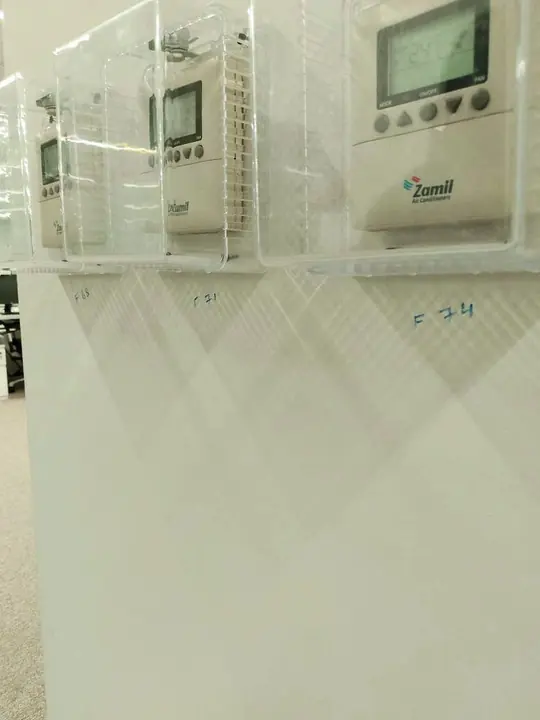
Adjusting the temperature is the easiest step and the quickest to pay off. A common guideline is a summer setting of around 24°C, which many people find comfortable, and every degree lower adds to the load on the AC and raises consumption.
A frequent mistake is setting the AC to 16 or 18°C to cool a room faster. In most units this does not noticeably speed up cooling; it simply keeps the unit running until the room is colder than you need. Running a ceiling fan alongside the AC lets you feel comfortable at a slightly higher setting, and a timer or programmable thermostat helps you avoid cooling empty spaces.
Simple maintenance makes a big difference
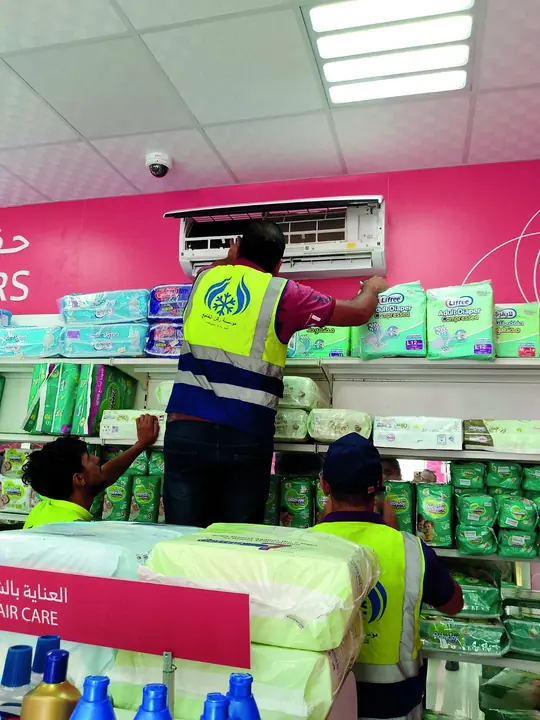
A dirty filter reduces the airflow through the AC, so it runs longer to reach the set temperature. Cleaning filters regularly, especially during dusty seasons, is one of the cheapest and most effective ways to save energy. Check them after every sandstorm too, as they can clog within days in those conditions.
The outdoor unit matters just as much, since it rejects heat from the building, and any dust on its coils or obstructions around it make it work harder. Make sure to:
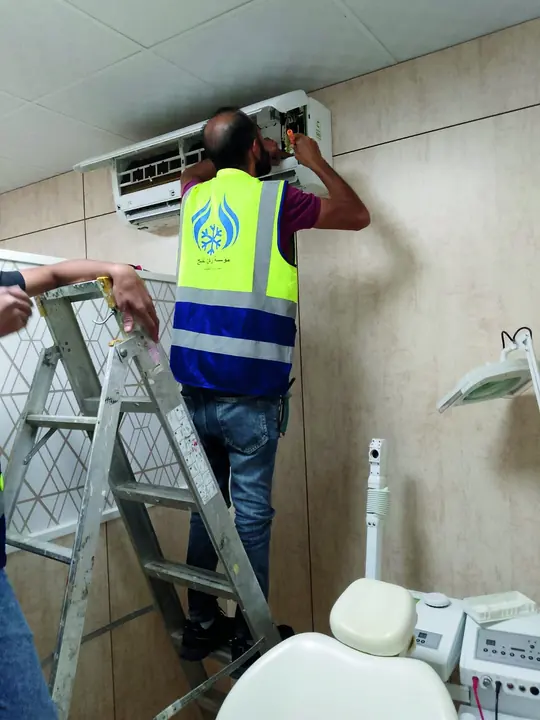
Have the outdoor coil cleaned periodically by a technician, especially after sandstorms.
Leave enough clearance around and in front of the unit, and keep stored items away from it.
Shade the unit from direct sun where possible, as long as the shading does not block airflow or the hot air discharge.
Have the refrigerant checked if cooling weakens, and any leak repaired, because low refrigerant weakens cooling and lengthens running hours.
Reduce the heat getting into the space
The less heat that enters a space, the less work the AC has to do. Heat does not come from the sun alone: hot air leaking through gaps, equipment, lighting and the number of people in the space all add to the load. In a Riyadh summer, direct sunlight on windows and walls is one of the largest sources of heat, so these steps deserve attention:
Use reflective blinds, heat-reflective window film or external shading on sun-facing windows.
Seal gaps around doors, windows and AC pipe openings to keep out hot air and dust.
Keep external doors closed as much as possible, and consider air curtains at busy shop entrances.
Cut down on heat-producing equipment and switch to LED lighting, which gives off less heat.
Improve roof and wall insulation when renovating or building; it keeps paying off for years.
The right capacity and the right technology
An oversized AC does not save energy, as some people assume. It cools quickly, then cycles on and off frequently, removing humidity poorly and using more energy than necessary. An undersized unit, on the other hand, runs non-stop and may never reach comfortable conditions. Real savings therefore start with a proper load calculation before you buy.
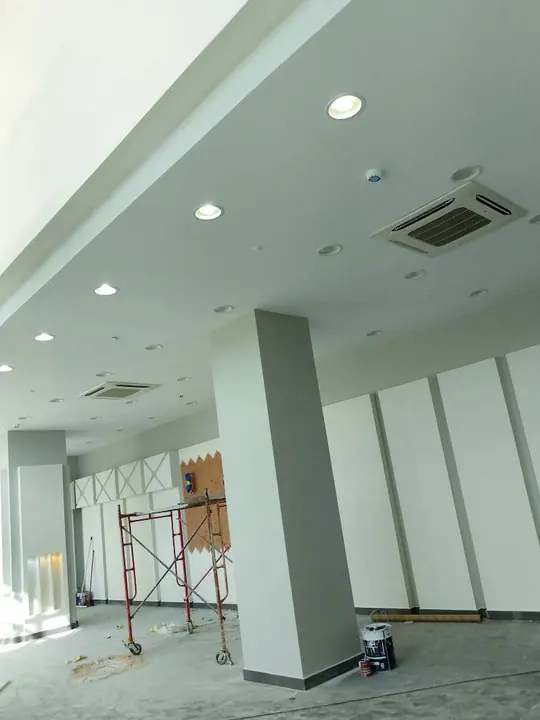
Inverter units also help cut consumption because they adjust compressor speed to demand instead of repeatedly switching on and off. In larger buildings, dividing the system into independent zones and scheduling operation around usage hours helps, and well-sealed, properly insulated ductwork limits the loss of cool air in ceiling voids before it reaches the rooms.
If you already have a ducted system, an inspection may reveal leaking joints, damaged insulation or unbalanced airflow between diffusers, and fixing these can improve cooling and cut consumption without changing the equipment.
When replacement is the real saving
Older air conditioners lose some of their efficiency over the years, and many were designed to lower efficiency levels than modern units in the first place. If you have an old unit that breaks down often and consumes a lot, replacing it with a modern, high-efficiency, correctly sized unit may cost less over the medium term than continuing to repair it and pay its bills. When replacing, choose the new capacity based on a load calculation rather than simply copying the old unit, as the needs of the space may have changed.
For businesses, an upgrade is also a chance to review the whole design: are the capacities right? Is the air distribution good? Could zone control or scheduling be added? Answering these questions can deliver bigger savings than simply swapping units.
Everyday habits at home and at work
Lasting savings come from simple habits that everyone follows, and they differ slightly between homes and businesses:
At home: switch off the AC in unused rooms instead of leaving units running in every room all day.
At home: use a timer to start the AC shortly before you return rather than leaving it on while you are out.
At home: close curtains during hours of strong sun, especially in west-facing rooms in the afternoon.
At home: clean the filters regularly; this is the easiest step you can take yourself.
At work: tie AC operation to working hours, and reduce cooling in storerooms and rarely used areas.
At work: make one person responsible for thermostat settings to avoid constant changes by staff.
At work: stick to a periodic maintenance schedule, as clean, well-checked units use less energy.
At work: train staff to keep doors closed and to switch off the AC in halls and rooms once they are no longer in use.
Key takeaway
Cutting AC consumption does not mean sacrificing comfort. It means smarter settings, well-maintained equipment, less heat entering the space, and the right capacity and technology. Start with the easy steps today, and if your units are old or break down often, the Rukn Al Khaleej team can help you maintain them or replace them with more efficient equipment.